Signs You Need Branch Chipping in Rotorua
A closer look is worth arranging whenever any of the following start to stand out on the property:
- ✓Large branch piles.
- ✓Heavy logs blocking access.
- ✓Material left after pruning or removal.
- ✓Green waste that cannot be handled through normal garden collection.
These signs do not always mean the largest or most disruptive option is necessary, but they do deserve attention before the concern spreads or affects normal use of the property. Rotorua sites vary in access, ground conditions and exposure, so photographs can help with an initial conversation but do not replace seeing the work area. Our team considers what is changing, what is within reach of people or structures, and whether another service should be coordinated at the same time. If there is an immediate hazard, keep people clear and call for advice instead of trying to cut, move or test the material yourself.
Firewood in Rotorua: How we Work
We begin by confirming the objective and inspecting the tree, vegetation and work zone, then work through a sequence planned around this property:
Assess Material Size and Condition
We evaluate the size, density, and condition of the material on site to determine the right processing approach, ensuring equipment is matched correctly to the job and preventing damage, delays, or unsafe handling during the process.
Separate Chip, Logs and Unsuitable Waste
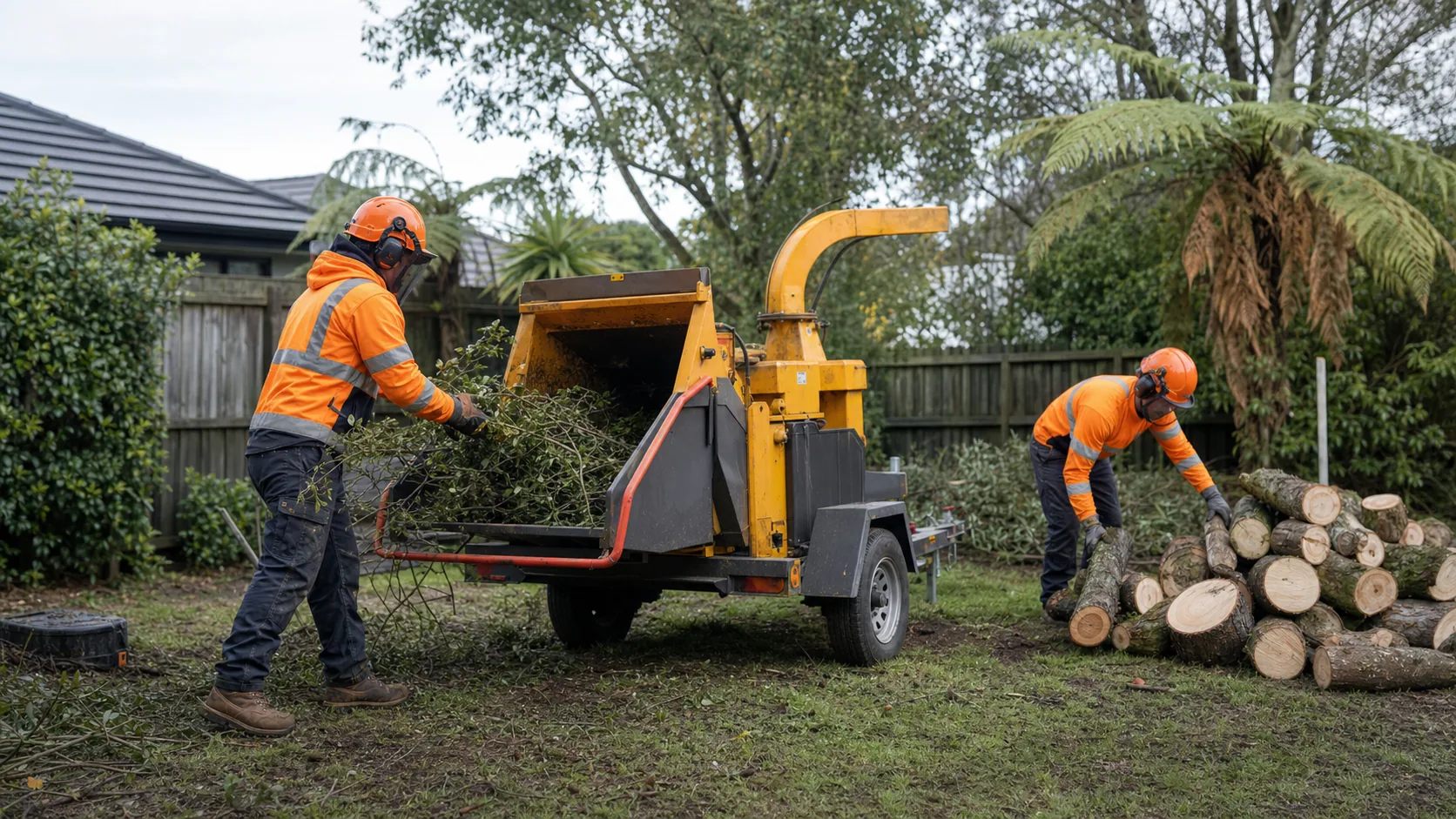
Material is sorted on-site into usable chip, logs suitable for firewood, and waste that requires separate disposal. This ensures nothing usable goes to landfill unnecessarily and simplifies handling for whichever end use each material is destined for.
Position Equipment Safely
Before processing begins, equipment is positioned with careful consideration of ground stability, clearance from structures, and safe operating distance from people or vehicles, reducing risk while ensuring efficient access to the material being processed.
Process or Load Agreed Material
Once positioned, we process or load the material according to what’s been agreed upfront, whether that’s chipping on-site, cutting to length, or loading directly for removal, keeping the job aligned with your specific requirements.
Rake the Immediate Work Area
After processing, the immediate work area is raked clear of loose debris, small offcuts, and chip scatter, leaving the site tidy and safe to walk through, rather than leaving mess behind for you to clean up.
Confirm the Agreed Finish Before Leaving
Before we leave, we walk the area with you to check that what has been chipped, stacked, or taken away matches what was agreed. Anything still to be collected is noted, so there is no confusion about what remains on site.
Equipment is selected after access, branch or material size, ground conditions and nearby property have been considered. Where people, vehicles or shared areas could be affected, the crew establishes a controlled work zone before cutting or machinery starts. Before leaving, we check the agreed result, remove the specified debris and explain any monitoring or follow-up that remains useful. The method is adapted to the site; it is never treated as a hazardous do-it-yourself procedure.
Finish Tree Work With an Orderly Site
A well-planned job can provide real, practical results:
Clearer access
Less bulky green material
Usable chip or log rounds where agreed
A tidier end to the job
How material is handled decides whether a job feels finished or merely stopped. Sorting on site means chip stays where it is useful, rounds go to whoever wants them, and only genuine waste leaves the property. Because this work usually follows section clearing or scrub mulching, agreeing the material outcome beforehand avoids a pile nobody planned for. What Happens to Branches and Logs After Tree Work? covers what typically happens to branches and logs afterwards, or send the team details and photographs to agree what should stay and what should go.