when do you need a Rotorua mulching service
A closer look is worth arranging whenever any of the following start to stand out on the property:
- ✓Large areas of dense light vegetation.
- ✓Repeated manual cutting with little progress.
- ✓Scrub limiting access or maintenance.
- ✓Bulky green material that is difficult to move.
These signs do not always mean the largest or most disruptive option is necessary, but they do deserve attention before the concern spreads or affects normal use of the property. Rotorua sites vary in access, ground conditions and exposure, so photographs can help with an initial conversation but do not replace seeing the work area. Our team considers what is changing, what is within reach of people or structures, and whether another service should be coordinated at the same time. If there is an immediate hazard, keep people clear and call for advice instead of trying to cut, move or test the material yourself.
Mulch Rotorua: what’s the process?
We begin by confirming the objective and inspecting the tree, vegetation and work zone, then work through a sequence planned around this property:
Inspect Terrain and Machine Access
We assess the site’s slope, ground conditions, and available access points before work begins. This determines which equipment can safely operate on-site and whether alternative access methods are needed for difficult terrain.
Mark Retained Vegetation and Exclusion Areas
Trees, shrubs, or features you’re keeping are clearly marked before clearing starts. This prevents accidental removal and ensures machinery operators know exactly which areas to avoid throughout the job.
Choose Suitable Equipment
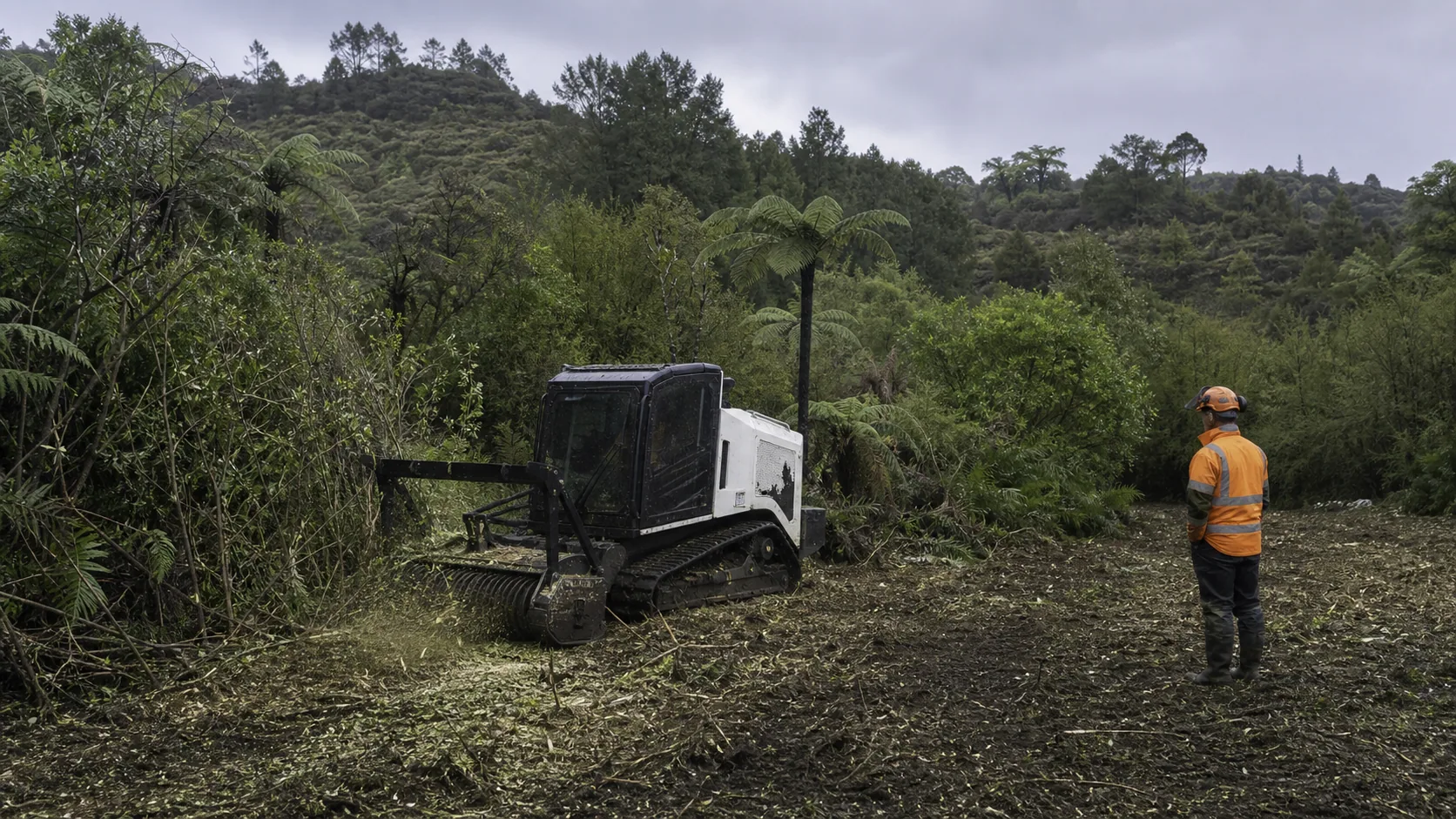
Based on vegetation density, terrain, and access, we select equipment ranging from hand tools for tight or sensitive areas to compact machinery for larger, more open sections requiring efficient clearing.
Work in Planned Passes
Clearing proceeds in a deliberate, section-by-section sequence rather than an unplanned approach. This maintains control over the site and reduces the risk of unexpected hazards as work progresses across the area.
Review Mulch Depth and Final Access
Once clearing is complete, we check that mulch coverage is even and appropriate, and confirm that access routes remain clear and usable for whatever comes next, whether that’s construction or landscaping.
Final Site Walkthrough and Clean-Up
We conduct a final inspection to confirm the agreed scope has been met, removing any remaining debris. This leaves the site tidy, safe, and genuinely ready for its next stage of use.
Equipment is selected after access, branch or material size, ground conditions and nearby property have been considered. Where people, vehicles or shared areas could be affected, the crew establishes a controlled work zone before cutting or machinery starts. Before leaving, we check the agreed result, remove the specified debris and explain any monitoring or follow-up that remains useful. The method is adapted to the site; it is never treated as a hazardous do-it-yourself procedure.
Benefits of Mulching
A well-planned job can provide real, practical results:
Improved Soil Moisture Retention
Mulch acts as a protective barrier that slows evaporation, helping soil retain moisture for longer periods. This reduces watering frequency and keeps plants healthier during warmer months or extended dry spells.
Suppressed Weed Growth
A layer of mulch blocks sunlight from reaching weed seeds, significantly reducing germination and growth. This means less time spent weeding and a cleaner, more manageable garden bed overall.
Regulated Soil Temperature
Mulch insulates the soil, keeping roots cooler in summer and better protected from temperature swings in cooler months. This stability supports healthier root development and reduces plant stress throughout the year.
Enhanced Soil Nutrition
As organic mulch breaks down over time, it adds nutrients back into the soil, improving fertility naturally. This supports healthier plant growth without relying heavily on additional fertilisers or soil amendments.
Reduced Soil Erosion
Mulch helps protect topsoil from being washed away during heavy rain, keeping garden beds intact and reducing runoff. This is particularly useful on sloped sections or areas prone to water movement.
Improved Garden Appearance
Beyond the practical benefits, mulch gives garden beds a neat, finished look. It creates clear definition between planted areas and lawn, adding a polished appearance to your overall landscaping.
Mulching suits properties where the material can stay on site, since processing in place avoids repeated trips to remove bulky green waste. That usually means faster treatment of suitable areas, better access afterwards, and a surface that breaks down rather than needing to be carted away. On mixed sites we often combine it with section clearing or firewood, log removal and chipping so heavier stems are handled separately. Scrub Mulching or Manual Clearing: Which Fits Your Property? explains when mulching beats clearing, or send the team details and photographs to describe the ground and vegetation.