When Do You Need a Large Tree removal in Rotorua
A closer look is worth arranging whenever any of the following start to stand out on the property:
- ✓A tall tree over buildings.
- ✓Limited drop space.
- ✓Large heavy limbs.
- ✓Decline or structural concerns at significant height.
These signs do not always mean the largest or most disruptive option is necessary, but they do deserve attention before the concern spreads or affects normal use of the property. Rotorua sites vary in access, ground conditions and exposure, so photographs can help with an initial conversation but do not replace seeing the work area. Our team considers what is changing, what is within reach of people or structures, and whether another service should be coordinated at the same time. If there is an immediate hazard, keep people clear and call for advice instead of trying to cut, move or test the material yourself.
Large Tree Removal Process in Rotorua
We begin by confirming the objective and inspecting the tree, vegetation and work zone, then work through a sequence planned around this property:
Inspect Tree and Access
We begin with a full assessment of the tree’s height, lean, condition, and root stability, alongside a review of site access. This determines whether equipment can reach the tree directly or if alternative access methods are required.
Select Climbing and Lifting Methods
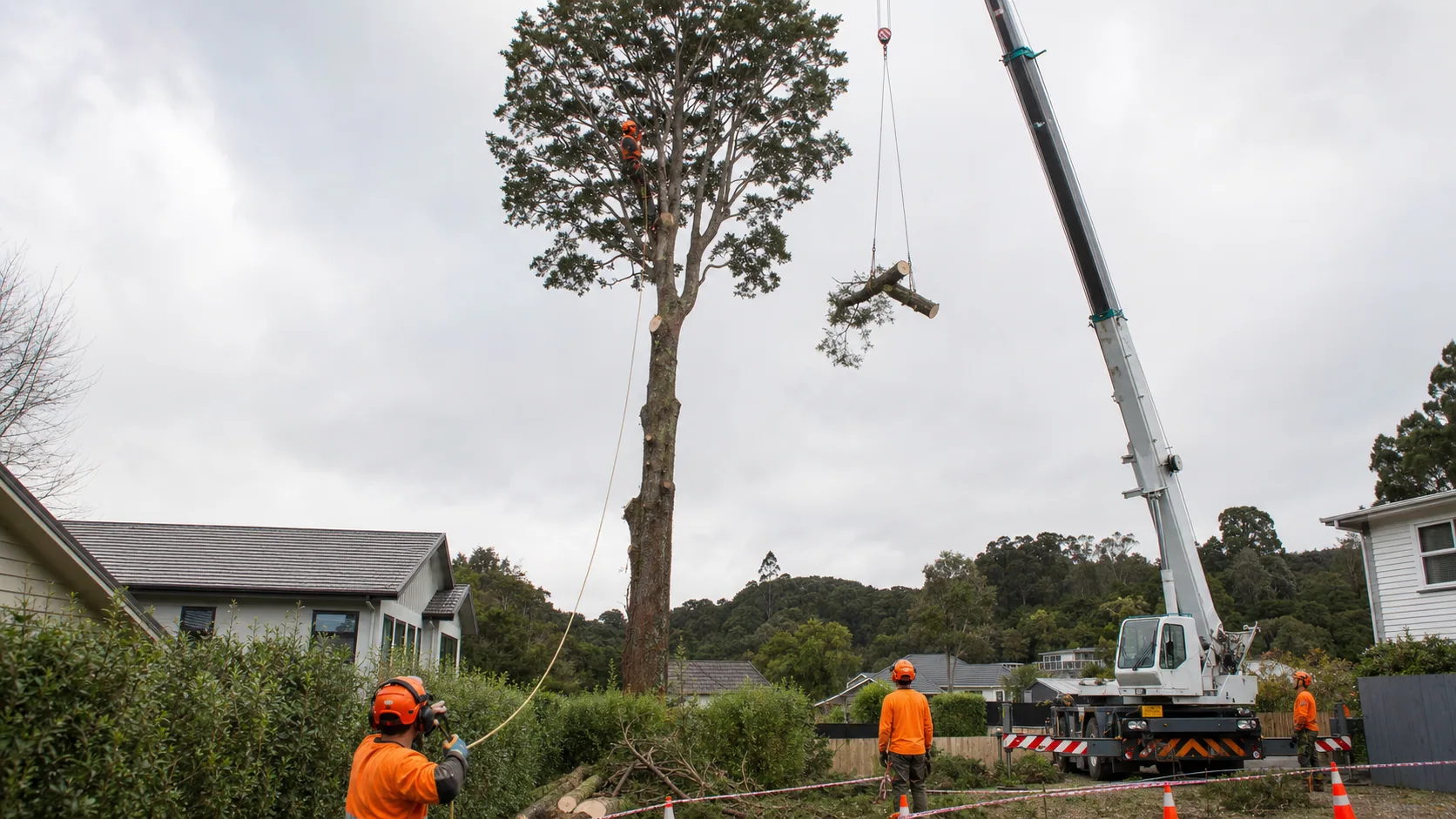
Based on the tree’s size and location, we choose the safest approach — whether that’s rope-based climbing, crane-assisted lifting, or a combination of both. The method is matched to the tree’s structure and the surrounding site conditions.
Set Exclusion and Protection Zone
Before any cutting starts, we establish a clearly marked exclusion zone to keep people, pets, and vehicles at a safe distance. Nearby structures, fences, and gardens are also protected to prevent damage during the removal process.
Plan Sectional Dismantling Sequence
For large or awkwardly positioned trees, we plan the order in which sections will be cut and lowered. This sequencing avoids unnecessary strain on remaining limbs and ensures each piece comes down in a controlled, predictable manner.
Lower and Manage Debris Safely
Cut sections are lowered using ropes or lifting equipment rather than dropped, minimising impact on the ground and surrounding property. Debris is managed progressively throughout the job to avoid clutter building up in the work zone.
Final Clean-Up and Site Check
Once the tree is fully removed, we clear all debris, chip or remove logs as agreed, and conduct a final walk-through of the site. This ensures the property is left safe, tidy, and ready for its next use.
Equipment is selected after access, branch or material size, ground conditions and nearby property have been considered. Where people, vehicles or shared areas could be affected, the crew establishes a controlled work zone before cutting or machinery starts. Before leaving, we check the agreed result, remove the specified debris and explain any monitoring or follow-up that remains useful. The method is adapted to the site; it is never treated as a hazardous do-it-yourself procedure.
Protect the Property Through Careful Planning
A well-planned job can provide real, practical results:
Controlled Load Movement
Every cut section or removed piece is lowered and moved in a controlled manner, rather than dropped or dragged. This prevents sudden impacts that could damage lawns, paving, or nearby structures during the removal process.
Reduced Impact on Nearby Property
Careful planning accounts for fences, gardens, driveways, and neighbouring structures before work begins. This minimises the risk of accidental damage, protecting not just your property but surrounding areas affected by the job.
Clear Site Coordination
Our team coordinates access, equipment placement, and work sequencing in advance, so the job runs smoothly without last-minute adjustments. This reduces delays and ensures everyone on-site understands the plan before machinery starts.
An Agreed Material and Stump Finish
Before work begins, we confirm exactly what happens to removed material and whether stump grinding is included. This avoids confusion or unexpected outcomes once the job is complete, keeping expectations clear from the outset.
Safe Handling Around Utilities and Services
Planning includes identifying nearby power lines, pipes, or underground services before any cutting or excavation occurs. This reduces the risk of accidental damage to essential infrastructure during the course of the job.
Minimal Disruption to Daily Activity
Thoughtful scheduling and site management help reduce disruption to your household or business operations, allowing work to proceed efficiently while keeping noise, mess, and inconvenience to a practical minimum throughout the process.
On a confined site, the difference between a controlled removal and an expensive one is how loads are moved rather than how quickly the tree comes down. Sections lowered under control protect lawns, paving and boundaries, coordination keeps access workable throughout, and the material and stump finish is settled before anyone starts cutting. Larger jobs frequently include tree removal or storm damage tree removal at the same time. How Arborists Remove Large Trees in Confined Spaces covers removing a large tree in a tight space, or send the team details and photographs to describe the access and surrounds.