A property can become harder to use when unexpected leaf loss or discolouration and dieback or sparse canopy growth. Waiting can make access, presentation or future maintenance more complicated, particularly when the work is above comfortable ground level or close to buildings. Our Rotorua Plant and Tree Health Care service starts with the concern you can see and the result you want, rather than assuming the same treatment suits every tree or site.
Our arborists inspect the work area, surrounding structures, vegetation and practical access before recommending a clear scope. The service starts with observation and diagnosis so that any treatment, pruning or soil work responds to the likely cause rather than being applied without evidence. You receive an explanation of what can be done, what material will remain or be removed, and how the property will be left. That makes it easier to compare options and arrange work that is proportionate to the site.
Free, No-Obligation Quote
Get a Free Quote
Tell us about your property and we'll get back to you with a clear price, usually within one business day.
Changes That Deserve a Closer Look
A closer look is worth arranging whenever any of the following start to stand out on the property:
✓Unexpected leaf loss or discolouration.
✓Dieback or sparse canopy growth.
✓Fungal fruiting bodies or unusual bark changes.
✓Recurring insect activity or poor vigour.
These signs do not always mean the largest or most disruptive option is necessary, but they do deserve attention before the concern spreads or affects normal use of the property. Rotorua sites vary in access, ground conditions and exposure, so photographs can help with an initial conversation but do not replace seeing the work area. Our team considers what is changing, what is within reach of people or structures, and whether another service should be coordinated at the same time. If there is an immediate hazard, keep people clear and call for advice instead of trying to cut, move or test the material yourself.
Tree Care Rotorua: Our Process
We begin by confirming the objective and inspecting the tree, vegetation and work zone, then work through a sequence planned around this property:
Record the Pattern and History
We start by understanding the tree’s background — previous pruning, past damage, growth patterns, and any recurring issues. This context helps us identify whether a problem is isolated or part of a longer-term trend that needs a different approach.
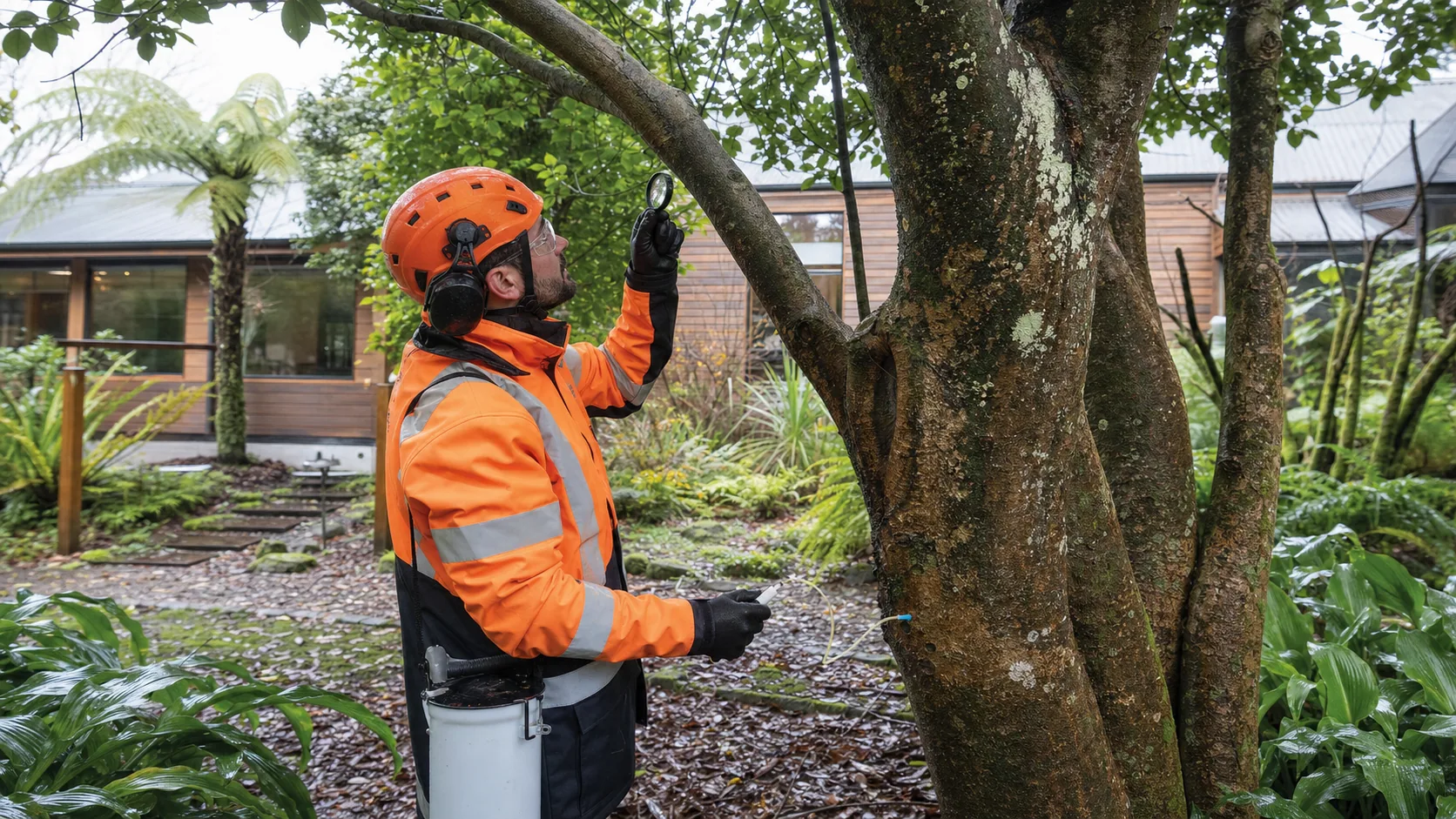
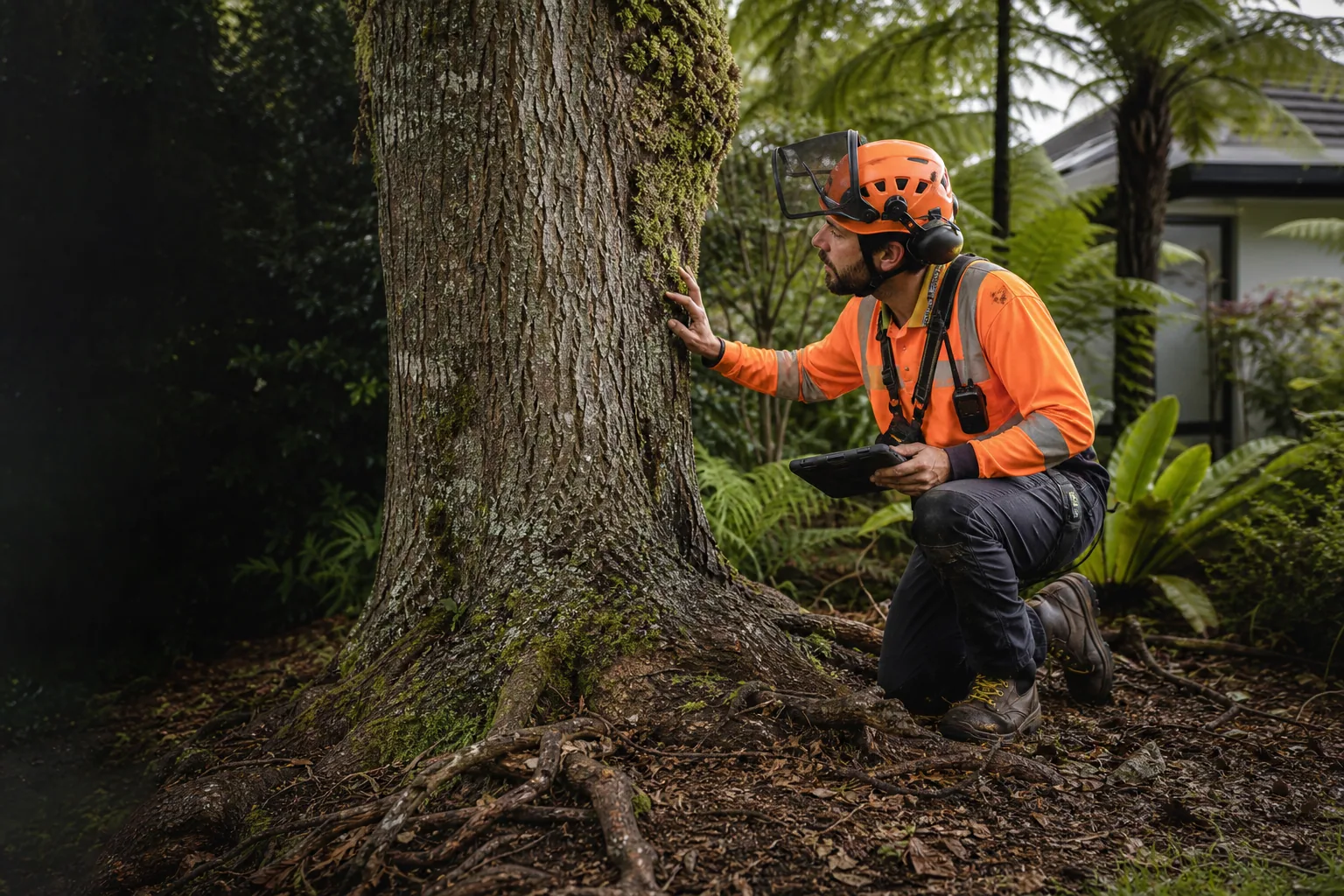
Inspect Canopy, Trunk, Roots, and Site Conditions
A full visual inspection covers every part of the tree, from canopy density and branch structure down to trunk condition and visible root health. We also assess surrounding site conditions, including soil, drainage, and proximity to structures.
Consider Environmental and Biological Causes
Rather than treating symptoms in isolation, we look at what’s actually driving the tree’s condition — pests, disease, soil compaction, drought stress, or root damage. Identifying the real cause ensures our recommendation actually solves the problem.
Recommend Proportionate Options
We suggest the least invasive solution that genuinely addresses the issue, rather than defaulting to removal. This might mean targeted pruning, cabling, soil treatment, or ongoing monitoring, depending on what the tree specifically needs.
Monitor the Response Over Time
For trees showing early-stage issues, we track how they respond to treatment over subsequent visits. This allows us to adjust our approach if needed and catch any decline early, before it becomes a bigger problem.
Agree the Scope and Timing
Once the options are clear, we confirm the scope in writing along with timing, access needs, and what material will be removed. Coordinating this upfront avoids one task undoing another when several services are needed on the same property.
Equipment is selected after access, branch or material size, ground conditions and nearby property have been considered. Where people, vehicles or shared areas could be affected, the crew establishes a controlled work zone before cutting or machinery starts. Before leaving, we check the agreed result, remove the specified debris and explain any monitoring or follow-up that remains useful. The method is adapted to the site; it is never treated as a hazardous do-it-yourself procedure.
Rotorua Tree Care Services: Solving Tree Problems Fast
A well-planned job can provide real, practical results:
Clearer Diagnosis
By examining the full picture — history, canopy, roots, and site conditions — we identify the actual cause of a problem rather than guessing from surface symptoms alone, leading to conclusions that are accurate and specific to your tree.
More Targeted Care
Understanding the root cause means treatment can be matched precisely to what’s actually needed, whether that’s pruning, soil correction, or pest management, rather than applying a generic, one-size-fits-all approach that may not address the real issue.
Early Management of Decline
Ongoing monitoring allows us to spot early warning signs of stress, disease, or structural weakness before they become serious. Catching issues early often means simpler, less costly intervention, and a far better chance of long-term recovery.
Better-Informed Decisions About Retention
With a clear understanding of a tree’s condition and prognosis, you can make confident decisions about whether to retain, treat, or remove it, based on accurate information rather than guesswork or unnecessary precaution.
Fewer Unnecessary Removals
Because treatment is matched to the actual cause, trees that can be safely retained are kept rather than removed by default. That protects established planting on the property and avoids the cost of replacing a tree that still had years of life in it.
A Written Record for Your Property
You receive a clear account of what was found, what was recommended, and what follow-up is worth scheduling. That record is useful for insurers, body corporates, or simply tracking a tree’s condition across several seasons.
Understanding why a tree is struggling is what separates useful treatment from repeated guesswork. A clear diagnosis means the response can be proportionate, decline can be picked up while it is still reversible, and any decision about retaining or removing the tree rests on evidence. If the findings point toward root improvement and soil aeration or tree pruning, we can explain how those fit alongside ongoing care. Early Signs a Rotorua Tree Is Stressed or Diseased gives practical background on reading the early signs, or send the team details and photographs to describe what you are seeing.
Plant and Tree Health Care FAQs
Still deciding what the property needs? These answers cover the questions customers usually raise before arranging an assessment.
How do I know whether plant and tree health care is right for my property?
Start with the result you need and the condition of the site. We assess unexpected leaf loss or discolouration, dieback or sparse canopy growth and fungal fruiting bodies or unusual bark changes, then explain whether this service, a lighter intervention or another form of tree care is the sensible option.
What happens during a plant and tree health care visit?
The crew confirms the agreed scope, checks access and nearby hazards, protects the practical work area and completes the job in controlled stages. Material handling and the final tidy-up are included in the plan so the expected site finish is clear.
Can you carry out this work on rental or commercial property?
Yes. The service can be planned for homeowners, schools, body corporates and property managers concerned about declining or repeatedly stressed trees and plants. We confirm who can approve the work, how occupants or site users will be affected, and what access arrangements are needed before booking the job.
What affects the price of plant and tree health care?
Pricing reflects number and size of plants, diagnostic complexity, treatment type and monitoring or repeat visits. A site assessment lets us see those details and provide a scope based on the actual work rather than an unreliable one-size-fits-all figure.
How should I prepare before the arborists arrive?
Avoid applying new garden chemicals before the visit, note when symptoms first appeared, and share recent landscaping, drainage or construction changes.