Define What Stays and What Goes
Before any clearing begins, we walk the site with you to confirm which trees, shrubs, or features are being retained. This avoids confusion or accidental removal of vegetation you intended to keep on the property.
A property can become harder to use when access blocked by dense growth and vegetation hiding ground hazards. Waiting can make access, presentation or future maintenance more complicated, particularly when the work is above comfortable ground level or close to buildings. Our Rotorua Section Clearing service starts with the concern you can see and the result you want, rather than assuming the same treatment suits every tree or site.
Our arborists inspect the work area, surrounding structures, vegetation and practical access before recommending a clear scope. The service removes selected scrub, unwanted small trees and accumulated vegetation while protecting retained trees, boundaries and areas that should remain undisturbed. You receive an explanation of what can be done, what material will remain or be removed, and how the property will be left. That makes it easier to compare options and arrange work that is proportionate to the site.
Tell us about your property and we'll get back to you with a clear price, usually within one business day.
A closer look is worth arranging whenever any of the following start to stand out on the property:
These signs do not always mean the largest or most disruptive option is necessary, but they do deserve attention before the concern spreads or affects normal use of the property. Rotorua sites vary in access, ground conditions and exposure, so photographs can help with an initial conversation but do not replace seeing the work area. Our team considers what is changing, what is within reach of people or structures, and whether another service should be coordinated at the same time. If there is an immediate hazard, keep people clear and call for advice instead of trying to cut, move or test the material yourself.
We begin by confirming the objective and inspecting the tree, vegetation and work zone, then work through a sequence planned around this property:
Before any clearing begins, we walk the site with you to confirm which trees, shrubs, or features are being retained. This avoids confusion or accidental removal of vegetation you intended to keep on the property.
We assess site access points, fence lines, and property boundaries to understand what equipment can be used and where. This helps avoid disputes with neighbours and ensures clearing stays within the agreed work area.
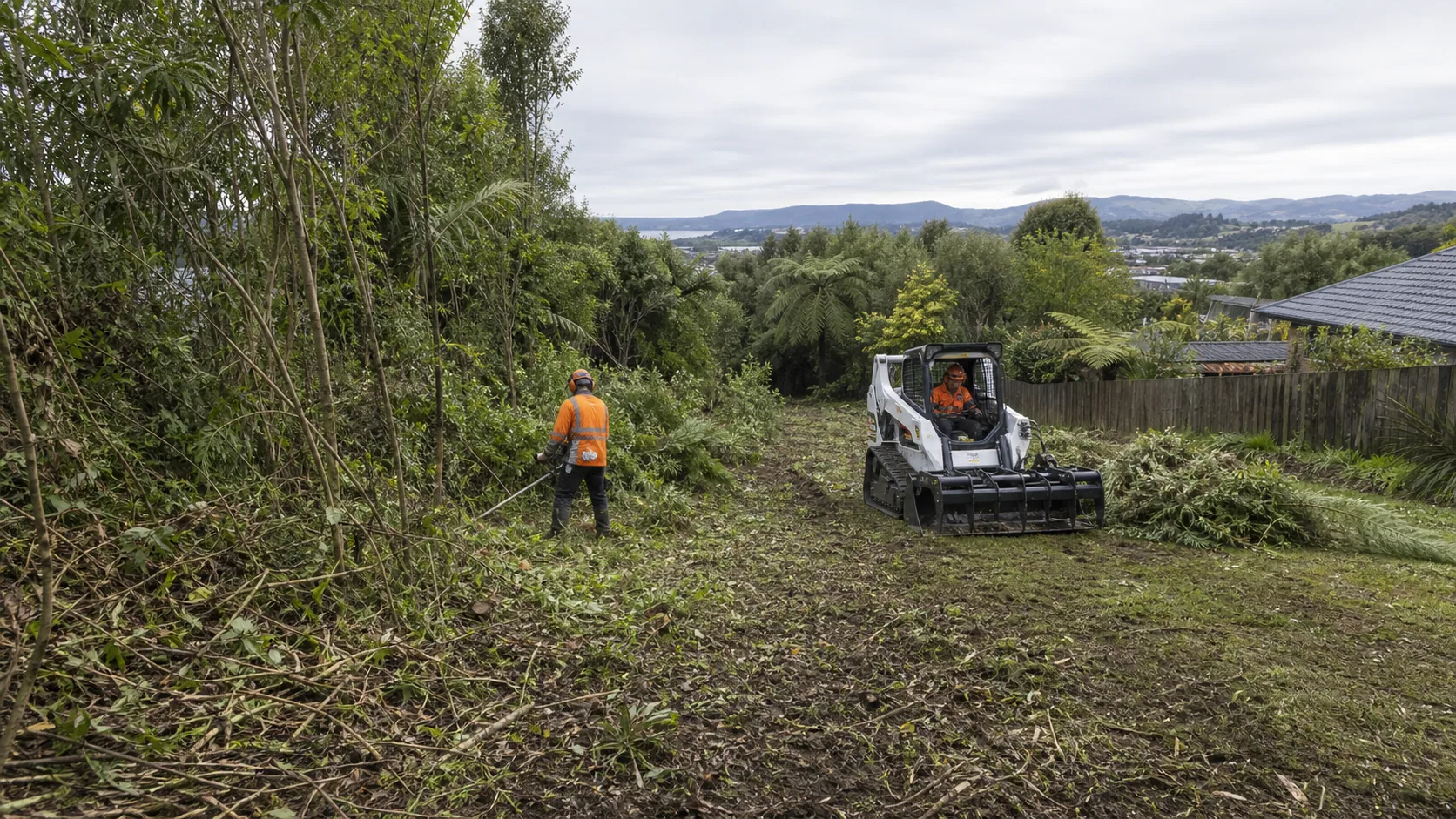
Depending on site size, vegetation density, and access, we choose between hand tools for tight or sensitive areas and compact machinery for larger, more open sections, ensuring the right approach for efficient, controlled clearing.
Rather than clearing indiscriminately, work proceeds in a planned sequence, section by section. This maintains control over the site throughout the job and reduces the risk of unexpected hazards as clearing progresses.
Cleared vegetation is sorted on-site into mulch, usable wood, and general waste. This ensures material is handled appropriately, whether it’s repurposed on the property or removed for disposal, rather than left in a single unsorted pile.
Once clearing is complete, we walk the site to confirm the agreed scope has been met and remove any remaining debris. This leaves the property tidy and ready for landscaping, construction, or everyday use.
Equipment is selected after access, branch or material size, ground conditions and nearby property have been considered. Where people, vehicles or shared areas could be affected, the crew establishes a controlled work zone before cutting or machinery starts. Before leaving, we check the agreed result, remove the specified debris and explain any monitoring or follow-up that remains useful. The method is adapted to the site; it is never treated as a hazardous do-it-yourself procedure.
A well-planned job can provide real, practical results:
Our team clears sites efficiently using the right equipment for the job, helping keep your construction, landscaping, or renovation project moving without unnecessary delays caused by slow or incomplete vegetation removal.
With careful planning around boundaries, structures, and access points, our experienced crew minimises the risk of accidental damage to fences, driveways, or neighbouring properties during the clearing process.
Rather than leaving cleared material in a disorganised pile, we sort mulch, wood, and waste appropriately, ensuring responsible disposal or reuse rather than unnecessary landfill contribution.
Our team follows proper safety protocols and, where relevant, council requirements for vegetation removal, protecting you from potential compliance issues while keeping the job site safe for everyone involved.
No two properties are the same, and our team adapts equipment and methods to suit your site’s specific size, access, and vegetation type, rather than applying a one-size-fits-all approach.
Once clearing is complete, we leave your site tidy and genuinely ready for the next stage, whether that’s construction, landscaping, or general property use, with no leftover debris or unfinished patches.
A cleared section is mainly useful for what comes next, whether that is fencing, a build, replanting or simply being able to walk the boundary again. Knowing what was retained and what was removed also makes the site easier to hand on to a landscaper or contractor. Clearing often pairs with scrub mulching or firewood, log removal and chipping, so we can agree the order and avoid covering ground that still needs machinery access. What to Plan Before Clearing an Overgrown Section sets out what to plan first, or send the team details and photographs to scope the area.
Still deciding what the property needs? These answers cover the questions customers usually raise before arranging an assessment.
Ask us about your propertyStart with the result you need and the condition of the site. We assess access blocked by dense growth, vegetation hiding ground hazards and a site being prepared for landscaping or construction, then explain whether this service, a lighter intervention or another form of tree care is the sensible option.
The crew confirms the agreed scope, checks access and nearby hazards, protects the practical work area and completes the job in controlled stages. Material handling and the final tidy-up are included in the plan so the expected site finish is clear.
Yes. The service can be planned for homeowners, lifestyle-block owners, developers and property managers dealing with overgrown or difficult sections. We confirm who can approve the work, how occupants or site users will be affected, and what access arrangements are needed before booking the job.
Pricing reflects area and vegetation density, terrain and access, material volume and machinery and disposal requirements. A site assessment lets us see those details and provide a scope based on the actual work rather than an unreliable one-size-fits-all figure.
Provide any available boundary or site information, mark features that must remain, and discuss future landscaping or building plans before clearance begins.